We’ve been blown away by the results of our ongoing biodiversity monitoring programme.
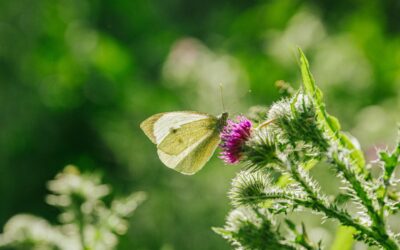
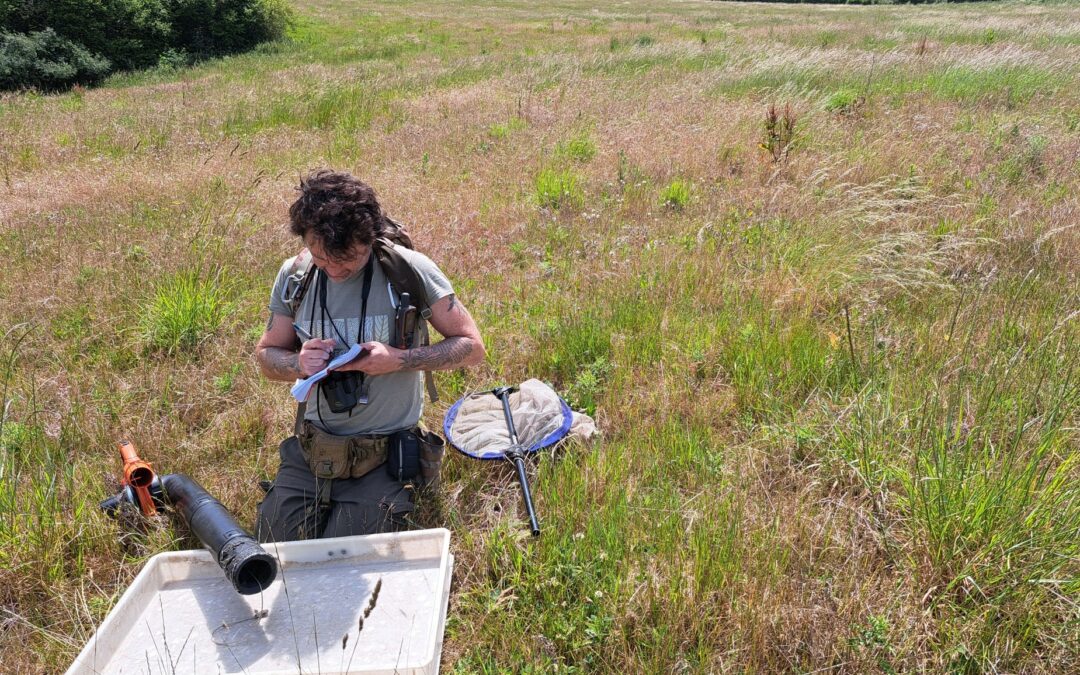
In June this year, we had a visit from the wonderful entomologist Graeme Lyons and in one day he recorded an incredible 274 different invertebrate species, with more collected to identify later under the microscope.
He came back a month later and recorded 290! He was clearly amazed by the huge variety of species making their home at Ewhurst Park, as you can see in this film clip from our Instagram page: https://www.instagram.com/reel/DLPAKSwoym7/
Graeme has been helping us to monitor the biodiversity changes that are happening across Ewhurst Park. In addition, we’ve been carrying out other surveys looking at birds, bats, butterflies and moths, dormice, reptiles and amphibians, and plants.
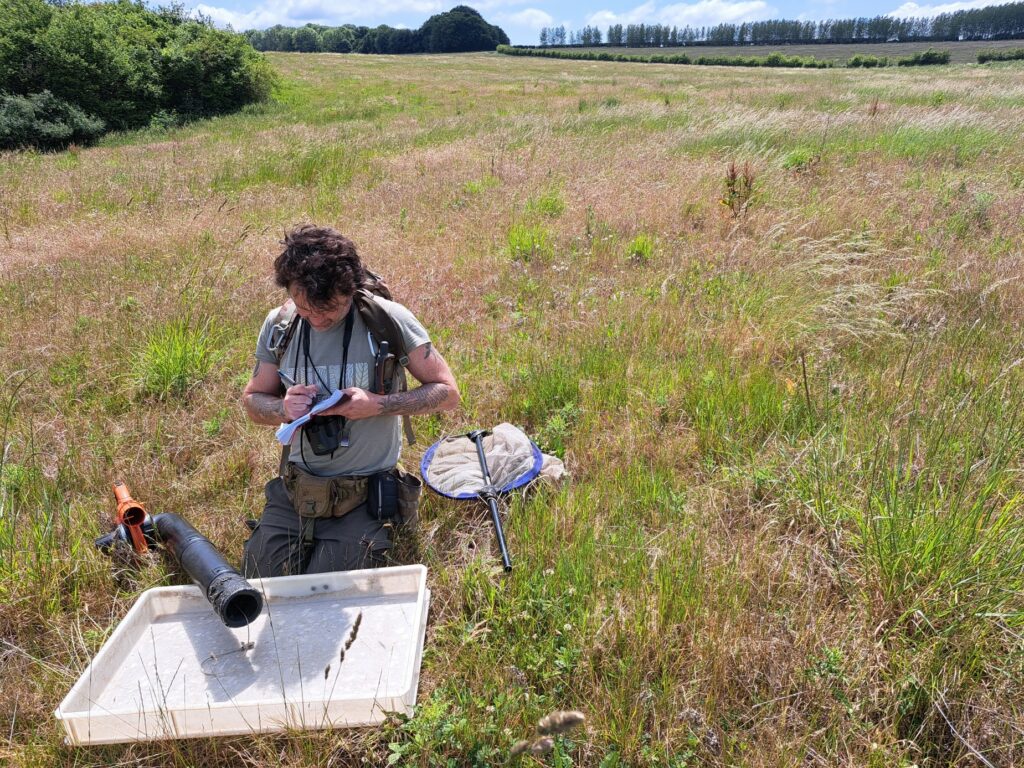
Entomologist Graeme Lyons working at Ewhurst Park.
In 2024, we recorded 90 species of birds, including many listed as being of red concern, meaning they are at risk of extinction in the UK – it’s great to think we’re providing a safe space for these endangered birds. In 2025, we recorded otters on site for the first time in around 70 years.
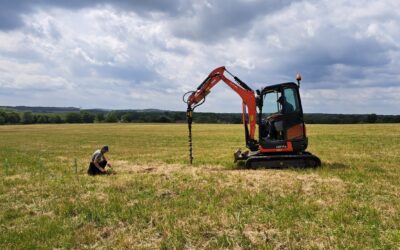
We’ve also had some exciting results from the monitoring station we set up in our Market Garden. This solar-powered collection of machines – formally known as an Automated Monitoring of Insects system (AMI system) – is monitoring nocturnal insects.
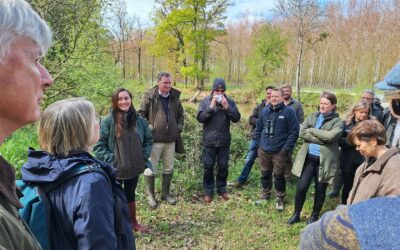
Elsewhere, we’ve had advisors from the Woodland Trust on site to survey woodland plant species. This generates useful feedback for both us and the trust.
We’re delighted, of course, by all this good news. It’s an indication that our initiative to regenerate the land at Ewhurst Park is going to plan.
There are many reasons for this increase in biodiversity, such as using livestock as engineering tools, encouraging pollinators to thrive, and taking steps to protect the soil which has increased organic matter and microbial activity.
Another reason for growing biodiversity is the extraordinary impact of our resident family of beavers, whose ‘ecosystem engineering’ – including dam building and tree felling – has created new habitats and resources for insects, fish, plants, birds and bats. We’ve recorded many important species in our beaver enclosure, including rare barbastelle bats.
Surveys and monitoring are essential work. As we watch this former shooting estate return to nature, we have been able to record which species thrive and which species are historically alien and holding nature back. We can then adjust our management strategies accordingly.